

I used to think that yellow or stained teeth were simply something I had to live with.
For a long time, I brushed twice a day, used mouthwash occasionally, and assumed that was enough. But over the last couple of years, I started paying much more attention to my smile. I noticed that certain foods and drinks seemed to make my teeth look darker, especially after months of drinking (Foods That Stain Teeth) coffee, tea, and eating foods with strong sauces.
The frustrating part was that I could brush my teeth and still feel like my smile looked dull.
That is when I started looking into what actually causes tooth staining and, more importantly, what I could realistically do about it.
I tried different whitening ideas, changed some of my eating habits, paid more attention to my brushing routine, and experimented with whitening products. Some things were genuinely useful. Others were either too inconvenient, too harsh, or simply did not produce the results I expected.
One of the biggest lessons I learned was this:
Whitening your teeth is only part of the equation. Preventing new stains is just as important.
So, if you are dealing with stained or yellow-looking teeth and wondering which foods are responsible, this guide is for you.
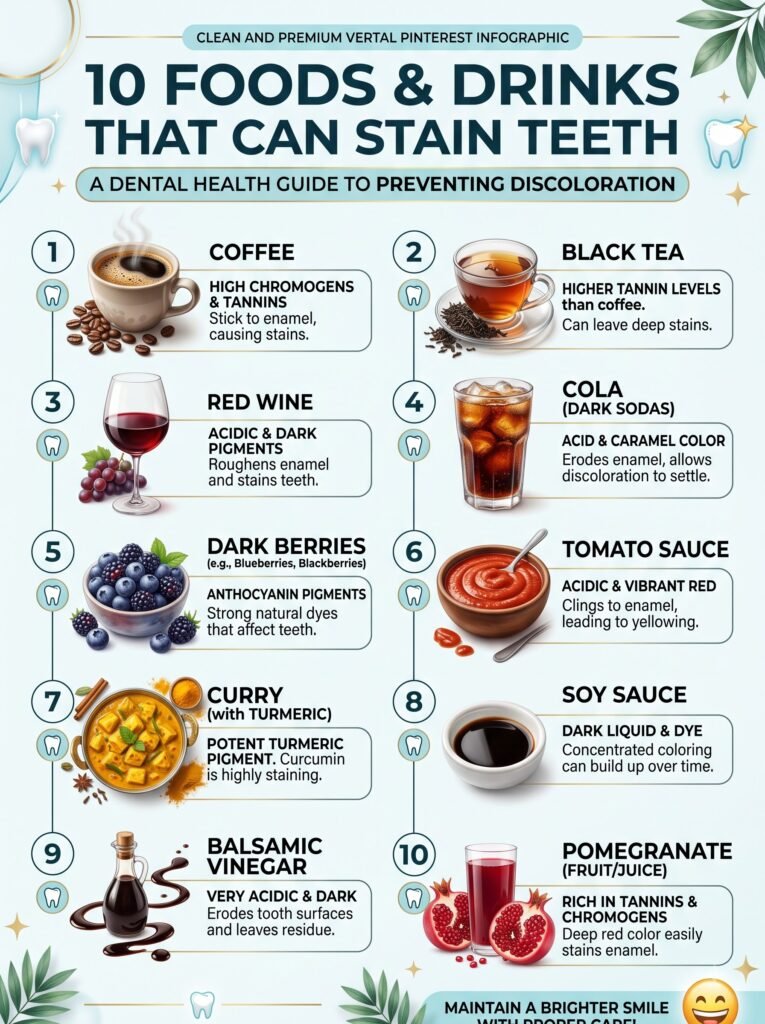
Below are 10 common foods and drinks that can stain teeth, followed by the practical oral-care habits that helped me keep my smile looking cleaner and brighter.
Affiliate Disclosure: This article may contain affiliate links. If you purchase a product through one of the links on this page, I may receive a commission at no additional cost to you.
Why Do Foods and Drinks Stain Your Teeth?
Before getting into the list, it helps to understand why staining happens.
The outer surface of your teeth is called enamel. Although enamel is extremely hard, it is not completely smooth or stain-proof. Tiny microscopic irregularities can allow pigments from certain foods and drinks to interact with the tooth surface.
About this item
- Hydroxyapatite Formula for Everyday Oral Care – Formulated with hydroxyapatite and commonly used oral care ingredients for daily brushing and routine mouth care.
- Fluoride-Free Toothpaste – A fluoride-free toothpaste designed for individuals who prefer an alternative toothpaste option for everyday use.
- Mint Flavor Experience – Features a refreshing mint flavor that leaves your mouth feeling clean and refreshed after brushing.
- Gentle Cleaning Formula – Helps remove everyday surface debris during regular brushing while providing a comfortable brushing experience.
- Suitable for Daily Use – Designed for morning and evening brushing as part of a regular oral care routine for adults.
There are two broad types of discoloration people commonly notice.
Extrinsic stains develop on the outside of the tooth. Coffee, tea, red wine, tobacco, and strongly colored foods can contribute to these surface stains.
Intrinsic discoloration occurs deeper within the tooth. Age, certain medications, trauma, and changes in the tooth itself can contribute to this type of discoloration.
This distinction matters because whitening products generally work better on some types of discoloration than others.
During my own search for a better smile, I realized I was making a common mistake. I was thinking only about removing existing stains while continuing to consume the same staining foods every day.
It was a bit like cleaning a white shirt while repeatedly spilling coffee on it.
Coffee
Let’s start with the obvious one.
Coffee was probably one of the biggest contributors to the staining I noticed.
Coffee contains naturally occurring compounds that can attach to the tooth surface and contribute to discoloration over time. If you drink several cups a day, the cumulative effect can become noticeable.
The tricky part is that giving up coffee completely is not realistic for many people.
I certainly wasn’t interested in giving up my morning cup just because I wanted a brighter smile.
What can you do?
Instead of completely eliminating coffee, consider:
- Drinking water afterward
- Avoiding slowly sipping coffee for hours
- Maintaining a consistent brushing routine
- Using a whitening toothpaste appropriate for regular use
- Considering a reputable whitening treatment if surface staining is bothering you
One simple habit that helped me was drinking water after coffee instead of immediately reaching for another flavored drink.
If coffee stains are one of your biggest concerns, take a look at the whitening option I recommend here. It can be a convenient addition to a normal oral-care routine.
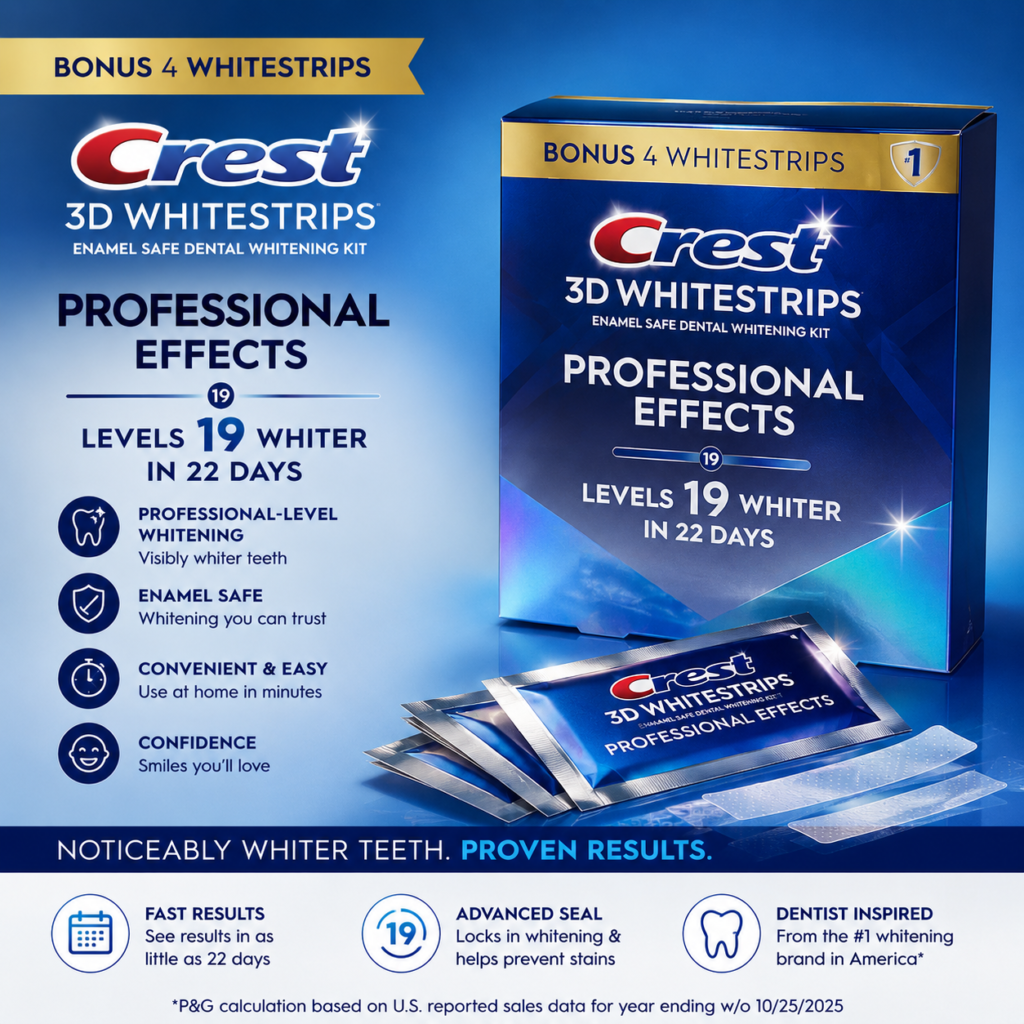
Crest 3D Whitestrips Professional Effects – At-Home Teeth Whitening Kit
- 19 levels whiter in 22 days (Results May Vary)
- #1 dentist recommended at-home teeth whitening brand*
- Safely removes stains with a comfortable, no-slip grip whitening experience
- Uses the same enamel safe whitening ingredient as dentists
- Enamel safe & effective
- Features our Advanced Seal Technology no-slip grip so strips stay put during full application time
✨ Ready for a Brighter-Looking Smile?
Skip the complicated routine and discover an easy at-home teeth whitening solution with Crest 3D Whitestrips Professional Effects.
Affiliate disclosure: This blog post may contain affiliate links. If you purchase through a link, I may earn a commission at no additional cost to you.
Black Tea
I originally assumed tea would be better than coffee.
That turned out to be a little more complicated.
Black tea can contain tannins and other compounds that may contribute to tooth staining. Depending on how frequently you drink it, tea can gradually make your teeth look less bright.
Tea is particularly easy to overlook because many people consider it a healthier everyday beverage.
But something being a popular beverage does not mean it cannot contribute to staining.
A simple tip
Try drinking water after tea. You can also avoid keeping tea in your mouth for long periods by drinking it normally rather than slowly sipping the same cup throughout the day.
And please do not immediately brush aggressively after every acidic drink or food. Give your mouth some time to return toward its normal pH before brushing.
3. Red Wine
Red wine is another well-known staining culprit.
It contains intense pigments called chromogens, along with tannins and acidity. That combination can make it easier for staining compounds to interact with the tooth surface.
If you enjoy red wine occasionally, you don’t necessarily need to panic.
The bigger concern is frequent exposure.
My approach
Whenever possible, I drink water alongside darker beverages. It is a small change, but it helps reduce the amount of residue sitting around your teeth.
Another important point is that whitening your teeth does not mean you can permanently prevent future staining. If you regularly consume highly pigmented foods and drinks, new stains can still develop.
That is why prevention and maintenance became a bigger part of my routine.
4. Cola and Dark Soft Drinks
Dark-colored sodas are another category worth watching.
Cola contains coloring agents and is also acidic. Frequent exposure to acidic drinks can contribute to enamel erosion, which is important because enamel plays a major role in the appearance and protection of your teeth.
I eventually stopped thinking of soft drinks as simply a “staining problem.”
They can be a broader oral-care issue when consumed frequently.
What I changed
Instead of drinking soda throughout the day, I tried to limit how frequently I consumed it.
I also started drinking water afterward.
And if you’re already experiencing significant tooth sensitivity, be careful about jumping straight into aggressive whitening treatments. Sensitivity is one of the most common complaints people have when using whitening products.
5. Berries
Berries are healthy foods, but some of them can be surprisingly colorful.
Blueberries, blackberries, cherries, and other deeply pigmented fruits contain natural pigments that can temporarily or gradually contribute to surface discoloration.
That doesn’t mean you should stop eating berries.
Personally, I would never recommend sacrificing nutritious foods simply because you’re worried about a slightly darker-looking smile.
Instead, focus on good oral hygiene after eating them.
Easy habit
Drink some water after eating strongly colored fruits.
If you’re away from home, even rinsing your mouth with water is better than allowing food residue to sit on your teeth for a long time.
6. Tomato Sauce
This one surprised me more than I expected.
Tomato-based sauces are highly pigmented and can also be acidic. Pasta, pizza, lasagna, and other meals containing tomato sauce can therefore become another source of regular exposure.
And if you’re anything like me, these foods are probably not disappearing from your diet.
The goal isn’t perfection.
The goal is simply to become more aware.
After meals, drinking water is one of the easiest habits to adopt. Regular brushing and flossing also remain much more important than obsessing over individual foods.
7. Curry and Dark-Colored Spices
As someone who enjoys flavorful food, I wasn’t particularly happy about this one.
Certain curries, sauces, and heavily pigmented spices can leave noticeable color on the teeth, particularly when eaten frequently.
Foods containing turmeric, for example, are intensely colored. While that doesn’t mean every curry meal will permanently stain your teeth, repeated exposure to strongly pigmented foods can contribute to surface discoloration.
Here’s what worked for me
I didn’t stop eating these foods.
Instead, I became more consistent with:
- Drinking water after meals
- Brushing twice daily
- Cleaning between my teeth
- Visiting a dental professional when necessary
- Using whitening products sensibly rather than excessively
That last point is important.
More whitening does not automatically mean better whitening.
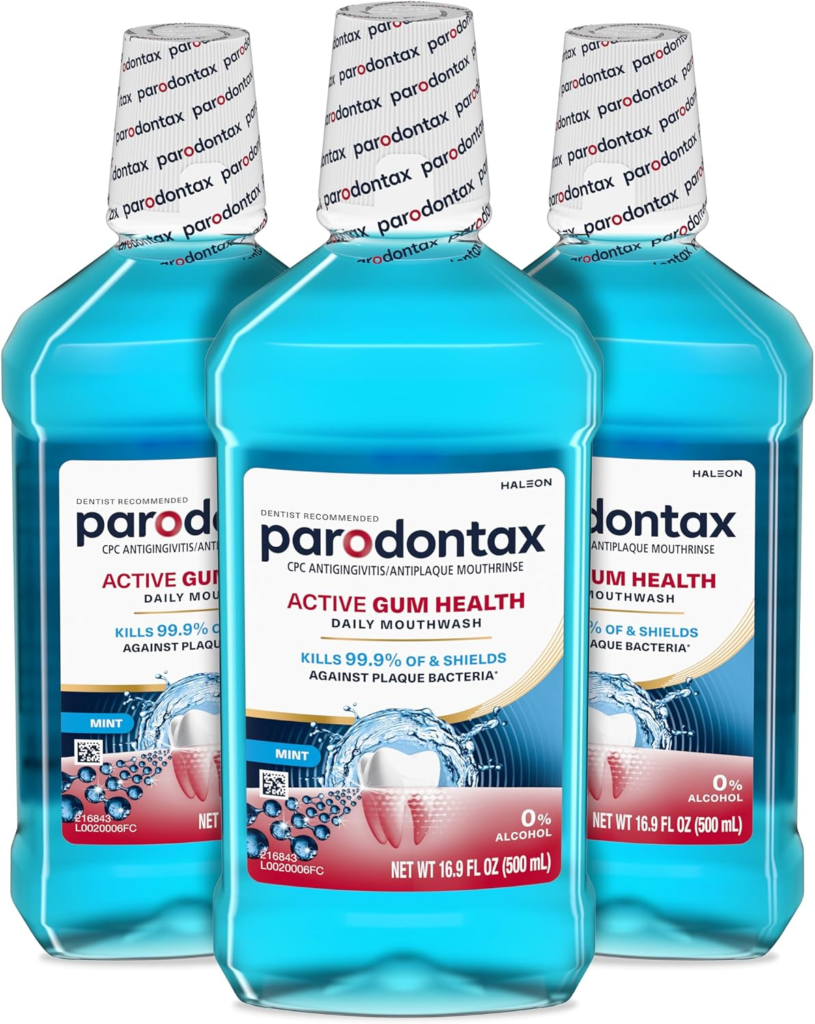
Parodontax Active Gum Health Daily Mouthwash – Daily Oral Care
Three bottles of Parodontax Active Gum Health Daily Mouthwash are displayed prominently against a clean white background. The product is positioned as part of a daily oral-care routine focused on gum health and plaque control. The blue mint mouthwash packaging creates a fresh, clean visual that works well for dental-care, oral-hygiene, gum-care, and mouthwash product content.
🦷 Upgrade Your Daily Oral-Care Routine — Check out this gum-care mouthwash and see if it’s right for your routine
Affiliate Disclosure: This article contains affiliate links. If you purchase through one of our affiliate links, we may receive a commission at no additional cost to you.
8. Balsamic Vinegar and Dark Sauces
Dark sauces can be easy to forget when you’re thinking about tooth stains.
Balsamic vinegar, soy sauce, barbecue sauce, and similar foods contain strong pigments. Some are also acidic.
If you regularly eat meals containing these ingredients, they can become part of your overall exposure to staining substances.
Again, I’m not suggesting you eliminate them.
Instead, think about the bigger picture.
If your daily routine includes coffee in the morning, black tea later, dark sauces at lunch, and cola in the evening, your teeth are being exposed to staining and acidic substances repeatedly throughout the day.
Reducing the frequency of exposure can make a meaningful difference to your oral-care routine.
9. Popsicles and Colored Candy
This one is particularly relevant for people who frequently consume brightly colored sweets.
Red, blue, purple, and other artificial food colors can temporarily leave noticeable color on the tongue and tooth surfaces.
The bigger concern with candy, however, isn’t only staining.
Many sugary foods can contribute to an environment that encourages tooth decay when consumed frequently and when oral hygiene is inadequate.
So if you enjoy candy, moderation and proper dental hygiene are much more useful than trying to completely eliminate every colorful food.
10. Soy Sauce
Soy sauce deserves its own spot because it is incredibly common in many meals.
It has a deep, dark color and can become a regular source of pigment exposure if you’re eating it frequently.
The same principle applies here as with coffee and tomato sauce.
You don’t necessarily have to remove the food from your diet.
Instead:
Enjoy it, rinse with water afterward, and maintain your normal oral-care routine.
For me, that mindset was much easier to maintain than trying to follow an unrealistic “never eat anything that can stain your teeth” diet.
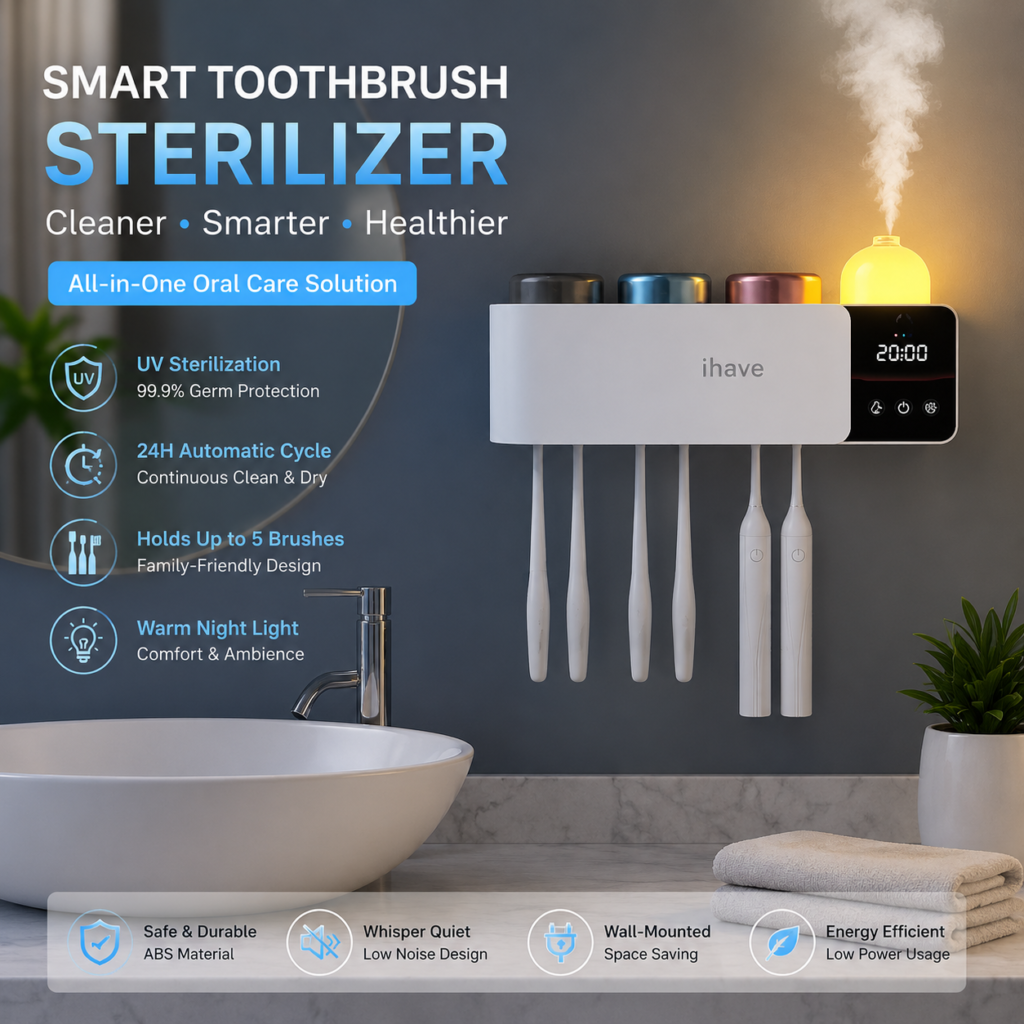
iHave Toothbrush Holder Aromatherapy Diffuser Wall Mount UV Sanitizer 3-Cup
Keep your toothbrush storage area cleaner and more organized with this smart toothbrush sterilizer and drying system. Designed for modern bathrooms, the wall-mounted unit combines toothbrush storage with UV sanitizing and automatic drying features. It can hold multiple toothbrushes and includes a convenient night light, making it a practical addition to everyday oral-care routines. Its compact design helps save counter space while keeping toothbrushes neatly stored and ready for use.
Keep your toothbrushes organized, dry, and conveniently stored with a smart toothbrush sterilizer designed for modern bathrooms.
Affiliate disclosure: This blog post may contain affiliate links. If you purchase through a link, I may earn a commission at no additional cost to you.
So, Should You Stop Eating These Foods?
No.
At least, that’s not the approach I would recommend.
Some of the foods on this list are actually nutritious. Berries, for example, can be part of a healthy diet. Giving up healthy foods solely because they have strong colors isn’t necessarily the right solution.
The smarter approach is to understand your exposure.
If you drink coffee multiple times a day and also consume tea, cola, red wine, curry, and dark sauces regularly, you may want to pay extra attention to your oral-care routine.
Think of it as a balance:
Enjoy your food + reduce unnecessary exposure + maintain good oral hygiene + use whitening products responsibly.
Simple Habits That Help Keep Teeth Looking Whiter
After trying different approaches over the years, I found that consistency mattered much more than complicated routines.
Here are the habits I would focus on first.
1. Brush Twice a Day
This sounds obvious, but it’s easy to underestimate how important it is.
Use a soft-bristled toothbrush and fluoride toothpaste unless your dentist has recommended something different.
Don’t scrub aggressively.
More pressure does not mean cleaner teeth.
In fact, aggressive brushing can irritate your gums and contribute to enamel or gum problems.
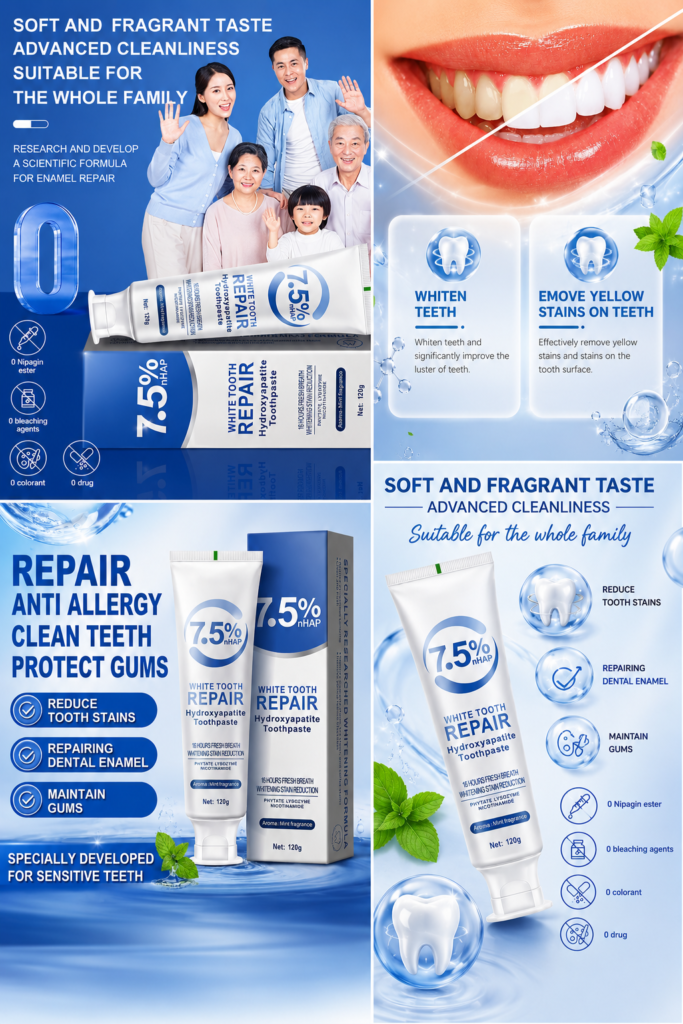
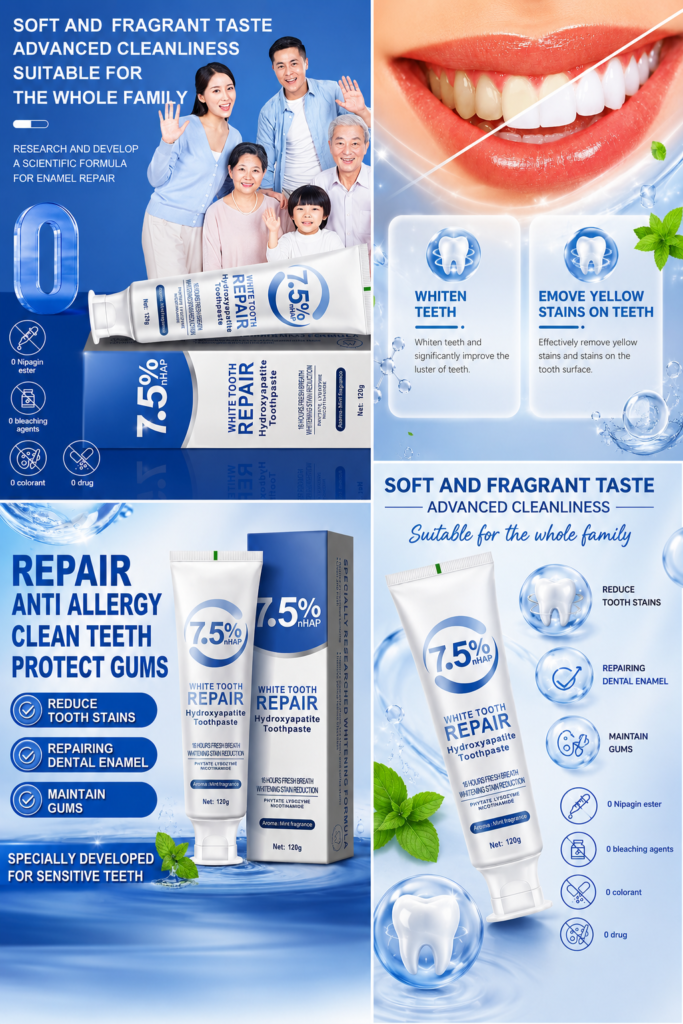
7.5% nHAp Hydroxyapatite Toothpaste for Teeth Whitening & Enamel Care
Promotional product collage featuring 7.5% nHAp hydroxyapatite toothpaste designed for daily oral care. The visual highlights whitening, yellow stain reduction, enamel-care and gum-care benefits, along with a soft mint flavor and sensitive-teeth positioning. Ideal for blog posts, Pinterest content and product reviews focused on hydroxyapatite toothpaste, teeth whitening, enamel care and oral hygiene.
Please Note: claims presented by the product, Results May Vary
🦷 Want to upgrade your oral-care routine? Check it Now
Affiliate disclosure: This blog post may contain affiliate links. If you purchase through a link, I may earn a commission at no additional cost to you.
2. Clean Between Your Teeth
A toothbrush cannot effectively reach every area between your teeth.
That’s why flossing or using another appropriate interdental cleaning method is important.
A smile can look much cleaner when plaque and food debris are consistently removed from areas that brushing misses.
3. Drink More Water
This became one of my favorite simple habits.
Water helps rinse your mouth after meals and beverages.
It is obviously not a replacement for brushing and flossing, but it is a very easy habit to add throughout the day.
Especially after coffee, tea, or strongly colored foods.
4. Don’t Overuse Whitening Products
This is where I think beginners can get into trouble.
When you want whiter teeth, it’s tempting to think that using a whitening product more often will make your teeth become dramatically whiter.
That’s not necessarily true.
Depending on the product and its ingredients, overuse may increase sensitivity or irritate your gums.
Always follow the product’s instructions.
If you have significant sensitivity, gum problems, cavities, restorations, or other dental concerns, speak with a dental professional before starting a whitening treatment.
What About Teeth Whitening Products?
This is probably the question most people have after reading about staining foods.
Can a whitening product actually help?
The answer depends on the product, your teeth, and the type of discoloration you’re dealing with.
I’ve looked at plenty of whitening products over the last few years, and one thing became very clear to me.
Convenience matters.
A whitening system that takes an unreasonable amount of time every day is much harder to stick with than something that fits naturally into your routine.
At the same time, I wouldn’t buy a whitening product simply because an advertisement promises unbelievably white teeth overnight.
Look at the ingredients, directions, safety information, customer feedback, and what the product is actually designed to address.
Most importantly, have realistic expectations.
Natural teeth aren’t supposed to look like completely artificial white porcelain.
A healthy-looking smile can still have some natural variation in color.
The Whitening Product I Would Consider
If you’re looking for a convenient whitening option and want to explore a product designed specifically for at-home teeth whitening, this is where I would recommend doing your own research before purchasing.
Want to Take Your Teeth Whitening Routine a Step Further?
Affiliate disclosure: This blog post may contain affiliate links. If you purchase through a link, I may earn a commission at no additional cost to you.
If regular brushing and lifestyle changes aren’t giving you the brighter-looking smile you’re hoping for, check out the whitening option below and see whether it fits your routine.
Affiliate disclosure: This blog post may contain affiliate links. If you purchase through a link, I may earn a commission at no additional cost to you.
Before buying, check the current ingredients, directions, pricing, refund terms, and suitability for your individual situation.
Pros and Cons of At-Home Teeth Whitening
I’ve found that it helps to look at whitening products realistically instead of treating them as miracle solutions.
Potential Pros
- Convenient to use at home
- Can be easier than scheduling cosmetic dental treatment
- May help reduce certain types of surface discoloration
- Can fit into an existing oral-care routine
- Generally more accessible than professional cosmetic procedures
- Useful for people who want to maintain a brighter-looking smile
Potential Cons
- Results vary from person to person
- Some people experience temporary tooth sensitivity
- Gum irritation can occur with some products
- Not every type of discoloration responds equally
- Overuse can be counterproductive
- Whitening does not prevent future stains
- Dental restorations such as crowns and fillings may not whiten in the same way as natural teeth
That last point is particularly important.
If you have visible dental work on your front teeth, don’t assume whitening will make everything the same shade.
Can You Whiten Teeth Naturally?
You’ll find hundreds of DIY teeth-whitening suggestions online.
Some recommend baking soda, lemon juice, activated charcoal, oil pulling, or other homemade methods.
I would be very cautious here.
Just because something is natural doesn’t automatically make it safe for your teeth.
Acidic ingredients can be particularly concerning because repeated acid exposure can damage enamel. Abrasive substances can also become problematic when used aggressively or too frequently.
If your goal is a brighter smile, I would rather use a product designed for oral care according to its instructions than experiment with harsh kitchen ingredients.
And if you’re unsure, ask your dentist.
What I Wish I Knew When I Started Whitening My Teeth
Looking back at the last few years, there are several things I wish someone had told me earlier.
Whitening isn’t permanent
Even if you get the result you’re looking for, your teeth can become stained again.
Coffee doesn’t stop being coffee after you whiten your teeth.
Prevention is underrated
Drinking water after staining foods and beverages is simple, but it can become a valuable habit.
Don’t chase an unrealistic shade
Your natural teeth have a natural color.
The goal should be a cleaner, brighter, healthier-looking smile rather than trying to make your teeth look unnaturally white.
Sensitivity matters
If whitening causes significant discomfort, don’t simply push through it.
Stop and reassess what you’re using.
Dental health comes first
Whitening is cosmetic.
Cavities, gum disease, enamel damage, and other dental problems need proper attention rather than being covered up with whitening.
A Simple Daily Routine for a Brighter-Looking Smile
If you’re a complete beginner, don’t make your routine complicated.
Here’s a simple starting point:
Morning
Brush your teeth with fluoride toothpaste.
Clean your tongue if you normally do so.
Drink water throughout the morning.
After meals
Rinse your mouth with water.
Avoid constantly snacking on sugary foods throughout the day.
Evening
Brush your teeth again.
Clean between your teeth.
If you’re using a whitening product, use it exactly according to its instructions.
That’s it.
You don’t need a bathroom shelf full of expensive products to start taking better care of your teeth.
Consistency is much more important.
When Should You See a Dentist?
Whitening products aren’t appropriate for every situation.
If your teeth have suddenly changed color, you have persistent tooth pain, bleeding or swollen gums, significant sensitivity, visible cavities, or a single tooth that has become noticeably darker, don’t assume it’s simply a cosmetic stain.
A dentist can determine whether there’s an underlying problem.
It’s also worth getting professional advice if you’re unsure whether a whitening product is appropriate for you.
This is particularly important if you’re pregnant, have significant dental sensitivity, have untreated dental problems, or have extensive dental restorations.
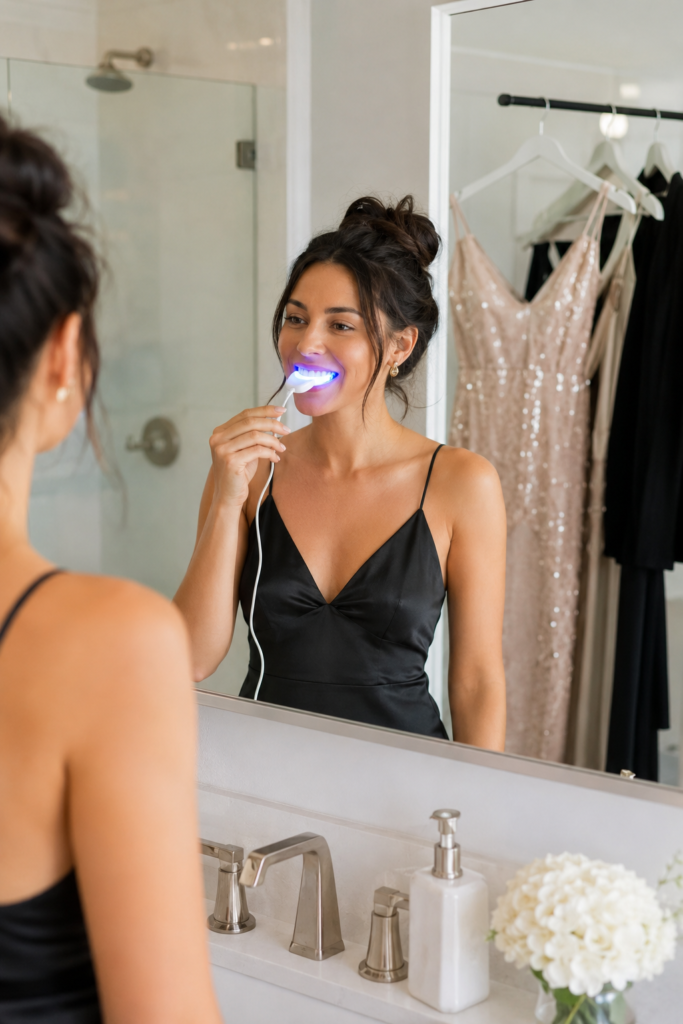
LED teeth whitening system
A young adult woman uses an at-home LED teeth whitening system while preparing for a special event in a clean, modern bathroom. This realistic lifestyle image highlights convenient LED teeth whitening at home, smile care, oral hygiene, and beauty preparation. The elegant outfit in the background creates a relatable pre-event setting for anyone looking to brighten their smile before a special occasion.
✨ Want to brighten your smile at home? Check out the LED teeth whitening kit here
Affiliate Disclosure: This article contains affiliate links. If you purchase through one of our affiliate links, we may receive a commission at no additional cost to you.
Final Thoughts
After spending a lot of time thinking about teeth whitening, I’ve realized that maintaining a brighter smile isn’t really about finding one magical product.
It’s a combination of habits.
Coffee, tea, red wine, tomato sauce, curry, berries, dark sauces, soda, and colored sweets can all contribute to the appearance of stains. That doesn’t mean you need to remove them from your life.
Instead, pay attention to how frequently you’re consuming them and what you do afterward.
Drink water.
Brush consistently.
Clean between your teeth.
Don’t abuse whitening products.
And if you decide to use a dedicated whitening system, choose one carefully and follow the instructions.
Most importantly, don’t get discouraged if your teeth don’t become dramatically white overnight.
Real oral care is a long-term process.
For me, the biggest change wasn’t finding one perfect trick. It was finally understanding that whitening and stain prevention have to work together.
If you’re currently looking for an at-home whitening option, you can learn more about the product I recommend below and decide whether it’s right for your routine.
Ready to Work on a Brighter-Looking Smile?
If you’re tired of seeing coffee and food stains every time you look in the mirror, take a closer look at this teeth-whitening option and see whether it fits your oral-care routine.
Remember to review the product’s ingredients, directions, pricing, and terms before purchasing.
Quick FAQ: Foods That Stain Teeth
What is the biggest food or drink that stains teeth?
Coffee, tea, red wine, dark-colored sauces, and other strongly pigmented foods and beverages can contribute to surface staining. Frequency of consumption also matters.
Does coffee permanently stain teeth?
Coffee can contribute to tooth discoloration over time, particularly with frequent consumption. Regular oral hygiene can help manage surface stains, but it doesn’t necessarily prevent all discoloration.
Can I drink coffee and still have white teeth?
Yes. You don’t necessarily have to give up coffee. Drinking water afterward, avoiding prolonged sipping, maintaining good oral hygiene, and using appropriate whitening products can help manage staining.
Does brushing remove food stains?
Regular brushing can help remove plaque and some surface discoloration, but brushing cannot necessarily remove every type of stain. Deeper discoloration may require professional evaluation or an appropriate whitening treatment.
Are whitening products safe?
Many whitening products are designed for home use when used according to their instructions, but sensitivity and gum irritation can occur. Product suitability depends on the individual, so consult a dental professional if you have concerns.
How long does teeth whitening last?
There isn’t one universal answer. Results depend on the whitening method, individual teeth, diet, oral hygiene, and exposure to staining foods and drinks. Whitening generally requires maintenance rather than being a one-time permanent solution.
Does lemon whiten teeth?
I would not recommend using lemon juice as a DIY teeth-whitening treatment. Lemon is highly acidic, and repeated acid exposure can damage tooth enamel.
Is baking soda good for whitening teeth?
Baking soda can have stain-removing properties because it is mildly abrasive, but using abrasive substances too aggressively or too frequently isn’t a good substitute for a complete oral-care routine. Use oral-care products as directed and ask your dentist if you’re unsure.
The Bottom Line
You don’t have to stop enjoying your favorite foods just because you want a brighter smile.
The real goal is to understand what causes staining and develop habits that help minimize it.
Eat the foods you enjoy. Drink water. Brush twice a day. Clean between your teeth. Use whitening products responsibly. And don’t ignore genuine dental problems.
A brighter smile isn’t about perfection.
It’s about taking care of what you have and being consistent.